
Trying to conceive and not getting there can be one of the hardest things a woman and her partner go through. It can bring worry, sadness and pressure on relationships, often in silence. If this is you, you are not alone, and it is not your fault. This guide explains, in plain language, how fertility works, how Ayurveda looks at it, what the research does and does not show, and how a consultation at Nature Care Ayurveda in Harris Park can offer calm, practical support alongside your medical care.
First, the important part
Fertility problems need proper medical assessment. Please see your GP, gynaecologist or fertility specialist, and book tests for yourself and your partner, since fertility depends on both people. Ayurveda is complementary support only. We cannot promise pregnancy, and nothing here replaces medical advice or treatment.
Please do not stop or change any prescribed medicine or fertility treatment without speaking to your doctor. If you are already having fertility treatment, tell us before you start any herb or therapy. If you are pregnant or think you may be, please tell us before any therapy.
See your doctor sooner if you have very painful, very heavy, irregular or absent periods, pain during sex, or bleeding between periods.
Common signs that are worth discussing with a doctor
- Periods that are irregular, very far apart, or missing
- Very painful or very heavy periods
- Pain in the lower belly or during sex
- Signs of hormone imbalance, such as acne or excess facial or body hair
- Not becoming pregnant after trying for 12 months (6 months if you are 35 or over)
Many women have no symptoms at all, so a medical check is the only way to know what is going on.
The Ayurvedic view of fertility
Ayurveda sees conception as the coming together of several things at the right time, not as one single factor. The classical texts name four, and compare them to a seed growing in a field:
- Ritu: the right time, which today we would link with the menstrual cycle and ovulation
- Kshetra: the “field”, meaning the womb and the reproductive organs
- Ambu: nourishment, meaning the water and nutrition that feed the process (digestion, diet and general health)
- Beeja: the seed, meaning the egg and the sperm
An Ayurvedic practitioner therefore looks at the whole picture: your cycle, digestion, sleep, stress, diet, routine and emotional wellbeing, along with your medical history. In Ayurveda, Vata is the principle of movement, and it is traditionally linked with the cycle and with stress. Pitta and Kapha are also considered. Calm, regular routines and good nourishment are traditionally seen as the foundation of reproductive health. These are traditional ideas. They are not a medical diagnosis.
What the classical texts say
The best-known statement comes from the Sushruta Samhita (Sharira Sthana 2.33):
dhruvaṃ caturṇāṃ sānnidhyād garbhaḥ syād vidhipūrvakam |
ṛtu-kṣetrāmbu-bījānāṃ sāmagryād aṅkuro yathā ||
“Conception takes place when four factors come together in the right way: season (time), field (womb), water (nourishment) and seed, just as a sprout appears when seed, water and fertile ground come together.”
This is a traditional statement shared for interest. It is not a medical claim or a promise of results.
How a consultation at Nature Care Ayurveda can support you
A first visit with Dr Naveen Shukla (Doctor of Ayurveda) focuses on listening and understanding. It usually covers:
- Your cycle history, medical history, test results and any treatment you are having
- Digestion, diet, sleep, stress, exercise and daily routine
- Gentle lifestyle suggestions that suit you
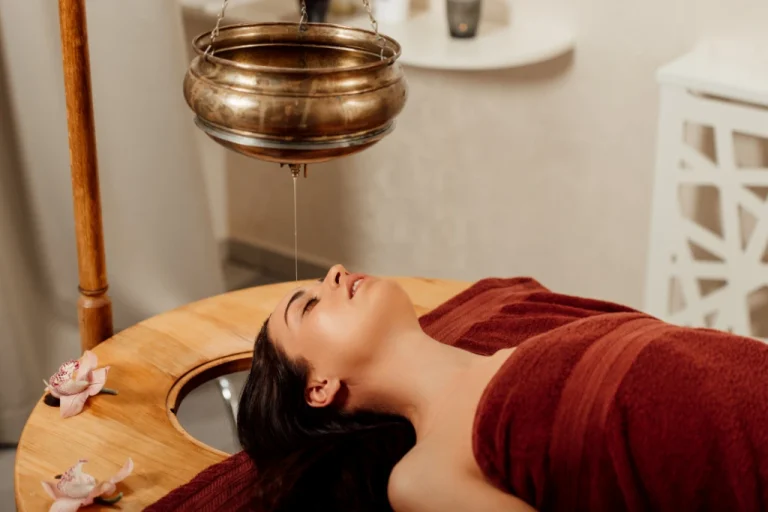
- Relaxing therapies where suitable
- Ayurvedic consultation:
- What to expect at a first visit:
- Online consultation if travel is hard, 1 hour, $120:
Relaxing therapies that may be discussed
Stress is part of life when you are trying to conc